Showing posts with label chickens. Show all posts

Sunday, May 20, 2012

(sub)Urban Farming

This is a reprint of my very first published article in the 2012 Spring Region 12 Newsletter for the American Hemerocallis Society.  I had never really thought I wanted to write for publication before, but I actually had a good time with it, and with writing the local club news article at the back of the issue. My apologies for the redundancy to those of you who have followed the blog.  If you know me, you already know all of this. But I hope you enjoy the recap!

When Greg Crane asked me to write a piece for the newsletter about “Chickens and Daylilies” I was, frankly, stumped. I’m a part-time blogger, and I’ve written about our chickens, and I’ve written about our daylilies on www.cari-daway.blogspot.com. But I 
never really thought about “Chickens AND Daylilies.”  A few weeks were spent with this 
concept rolling around in my mind, and more than a few attempts at writing that were actually spent looking at a blank screen and a blinking cursor. I asked the Facebook universe for ideas. My friend Timi said she understood my block by equating her being asked to write about her jeep and her dogs: two things she loves but don’t really intersect. 

One of our daylily club friends, Kyle Pierson, said that the feathers of the chickens could be like the colors in daylilies, or that going out to see the flowers in the morning is like looking for eggs. All are valid points. But nothing really lit my literary pilot light. I 
flirted briefly with the comparison of my hobby of collecting lists of potential chicken names (such as Magdalena Van der Flocken) with some daylily enthusiasts’ hobby of collecting lists of potential daylily names (I know you’re out there. Terri Jones can’t be the only one who does this!) Then it hit me: Poop! Yes, poop. Not literally, thank goodness. Put a pin in that thought, we’ll return to it in a few minutes.

I realized that the chickens were an integral part of the mini eco-system we’ve created in
our little neighborhood city lot. My husband and I both have green thumbs. I also have a
passion for healthy organic food and a clean environment that borders on the obsessive
(and occasionally annoying.) These qualities combined a few years ago into a 10-tower
hydroponic garden, a square-foot garden for my kitchen herbs and natural pest control
aphid-trapping bed, a worm composter and traditional compost bin, and our chickens:
Phyllis, Pearl and Francine. We also grow about 150 daylily cultivars. Small potatoes in
the daylily world, but when you consider how tiny our house and lot is, that’s about all
we have room for. I believe that in the chemical sense, one should impact the earth as
little as possible, but while doing that impacting, one should get as much out of it as one
can in the space allotted.

In the hydroponic garden, we grow enough produce to feed ourselves, the chickens, the
neighbors, my Pilates instructor, the girls at the local tea shop and sometimes our friends,
family and co-workers. The catnip grows especially well, as do tomatoes, Swiss chard,
onions, carrots, basil, snow peas, broccoli, cabbage, cucumbers, beans and many other
things. The ability to grow 6 times the produce in the same space as conventional
gardening appeals to me, as does the ability to do it without chemical pesticides,
fertilizers or fungicides that leach into the water table or harm wildlife. The only real
challenge we had was squirrels. Eventually Jay caged in the entire structure with chicken
wire, and that has kept out the squirrels, but continues to let in a tiny field mouse with
whom we’ve agreed to share. He doesn’t eat as much as a dozen squirrels do, so it seems
like a good balance. And the structure only looks a little bit like a prison camp….. but I
digress.

  Two years ago, Jay and I decided to get chickens. He spent about two months of
weekends and a spring break building a really nice coop. He is especially proud of its
door. In April of 2010 we brought home Babette, (who later grew into Bobette and had to go back to the farm) Sylvia, Pearl and Phyllis. Sylvia has since passed away, but Francine recently joined our flock. During the construction of the coop, Jay had dug up and potted all the daylilies so he’d have room to work without having to worry about tromping all over them in his many trips back and forth across the yard. When the coop was finished, he built two big (for our yard, about 8’ x 8’) raised beds about 18” high, to put all the daylilies back into. Here’s where the poop comes in. I told you we’d get back to that.

We – and let there be no doubt that when I say “we” it is all “Jay” - filled the beds with 
compost and bagged oak leaves we liberated from lawns and curb sides all over South
Tampa. But what really got the beds ready for replanting for the daylilies were the 
chickens. We finally got brave enough to let our very spoiled, indulged, coddled and
generally over-protected city chickens out of the coop to free-range every afternoon
(supervised closely, of course.) Jay tossed sunflower seeds up into the empty beds and the girls hopped in and started turning over the soil and, well, pooping. Poop = fertilizer = daylilies. Happy daylilies. 2011 was our best daylily season ever. The sunflower seeds in one of the beds did not get eaten as much as the other, so at one point we had a bed full of giant sunflowers with happy daylilies growing in their shade. When it became time to cut down all the sunflowers to give the daylilies room to grow, I dried the heads and gave them to the chickens. Poop = fertilizer = sunflowers = chicken treats = eggs + poop.

Every morning, Jay takes organic brown rice mixed with organic yogurt out to “the
girls,” and in bloom season he deadheads the daylilies and chucks them into the chicken
coop along with some Swiss chard, field-mouse-chewed tomatoes, or carrot tops from the
hydroponic garden. Since we don’t ever spray any dangerous chemicals in our daylilies
or in our hydroponic garden plants, we can safely feed them to the chickens. Poop =
fertilizer = daylilies + hydroponic vegetables = chicken treats = eggs + poop.
Since we have the chickens, and because I’m pretty militant about not spraying chemicals all over the yard that my chickens and invited wildlife and beneficial insects frequent, we do occasionally have to deal with uninvited guests such as aphids or sooty mold in the veggies that are in the squash family. This is where the worm composting and square foot garden comes in. Worm tea is a great anti-bacterial and insecticide that is safe to use in the garden. Gaura lindheimeri 'Whirling Butterflies’ is an aphid magnet. We plant it in a small square foot bed in relative close proximity to other plants that are aphid candy like daylilies or hibiscus, and the aphids glom onto the stems of the Guara and tend to stay off the plant we actually care about. Jay calls the stems “Aphid Popcicles” because I cut them off when they’re loaded up with aphids and feed them to the chickens. In the past, I’ve brought in ladybugs to then eat the aphids, but for the last couple of years, I just let the chickens eat them. If the aphids wipe out the Guara it’s not a big loss since they reseed like crazy, and are only $3 at the garden center. They’re cute, too. Worm tea + castings = Guara = aphid magnet = chicken treats = eggs + poop.

I bet you’re wondering now “What does she do with all that poop?” We make compost,
of course. And the cycle continues. We can use the compost to top dress the daylily
beds, and the butterfly garden, as well as supplement the Guara and my kitchen herb
garden. The compost bin is located next to the door that opens to clean out the hen house,
so I just have to scoop, turn and dump. Of course the garden and kitchen produce waste
that doesn’t get fed to the worms or the chickens goes into the pile, as well as eggshells
and tea leaves we pick up from a local tea shop and coffee grounds we get from Whole
Foods. It’s also located next to the fence by the neighbor’s yard, so they toss their kitchen waste into it as well.

Our chickens give us enjoyment every day, along with the eggs and poop we use to keep
our daylilies growing. Our daylilies give us enjoyment every day during bloom season,
and are good treats for the chickens. They do look a little like bloody dinosaurs when
they dig into a deadheaded blossom from a red cultivar, though. That can be a little
disconcerting. They love to take dust baths underneath my kitchen herb garden, and also
work diligently to keep down the unwelcome insect population in the yard. We rely on
our hydroponic farm to feed the chickens, and ourselves and compost whatever we can in
order to keep the cycle going. So there you have it. Chicken poop is the substance which
binds our (sub)Urban eco-system together.


.

Sunday, February 5, 2012

Achieving Chicken Integration

Jay and Sylvia
In November, we had our first chicken funeral.  Jay's favorite, our most docile and sweet girl, Sylvia, passed away somewhat unexpectedly. She had had a whistling sort of breathing sound for months, and several of the resources we consulted indicated that if she was still eating (check), not losing weight (check), still laying (check) and still acting normal (check) that she was probably fine and just had a scarred airway.  Sadly, they were wrong, and I went out to let the girls have some free-range time one afternoon and she was laying on the floor of the coop.  We had a funeral for her when Jay came home from work.  It was a hard thing.  I felt terribly guilty for her passing because I kept thinking we needed to do more for her, but hadn't acted on my instinct.  Lesson Learned: Find a good old-fashioned country veterinarian who would see poultry as part of the normal practice, so next time one of the girls seems out of sorts we have a place to take her. (check)

Francine
That same week, our friend called to tell us that he had a hen for us.  Months earlier, he had hatched a mixed nest of Cochin and Marans eggs.  Cochins are large and somewhat docile and have feathery feet.  Marans are a breed that lay extremely dark colored eggs and also have feathery feet.  The babies grew up, and our friend had an 'extra' Marans pullet (teenage girl chicken) that he wanted to share with us.  We were really excited about having a Marans, because of the unique color of their eggs, and because they are also very pretty chickens.

We were a bit concerned that we didn't know how to introduce new chickens to our small group (made smaller by Sylvia's passing) in a way that would keep all the girls safe both from one another as well as any germs, bacteria or diseases that might be transmitted between the birds.  To compound the concern, the new girlie was totally flea-infested. I thought she had brown feathers around her eyes.... but it was just a dense mat of fleas that were incredibly 'sticky' and stubborn.  She was crawling with them.  I felt so horrible for her.  It became even more important to isolate her, until we could get the flea situation under control.

Chicken Tractor
We went to a local farm supply and bought a portable chicken tractor to keep our Newbie in.  It's about 4' x 8', with a little sleeping loft. At this point we were still deciding on a name.  I wanted to have something French, since Marans are a French breed. She was called "Newbette" until we settled on a name (Francine). She was used to living with a large flock of birds, and now she was alone in a strange place, with airplane noises and traffic sounds.  Jay and I dusted the yard, the chicken, her new coop with Food Grade Diatomaceous Earth.  It's fossilized algae, that cuts and slices up the insides of the fleas and causes them to dehydrate and die.  It's safe to use on your yard and around your plants. You do need to wear a mask so you don't breathe in the dust because it can damage our lungs if inhaled in large quantities.

During this time, we let Phyllis and Pearl out of their coop and they made a bee-line over to the new tractor to check out their guest.  Everyone seemed to be adjusting well, and when we let Francine out, she went straight to the big coop and the ladies clucked and talked through the fencing.  After a few days, we decided to let everyone out together.  We had sat with her wrapped in a towel, pulling fleas off her with a tweezer a few times, and felt that we had enough of them under control to let them out together.

At first, it went well.  Phyllis and Pearl were nice enough, but they were occasionally bossy and a bit mean to her.  She would fly away a bit, and then come back towards them.  When evening came, we'd put her back in her tractor, and she became used to putting herself back at nightfall.  Finally we decided that it was time to try to let her integrate into the big coop.  That led to one of the most heartbreaking sights we'd ever witnessed in Chicken Land.  Apparently Phyllis and Pearl were okay with playing with Francine's toys, but did not want her to share their bedroom with them.  She would follow them gamely up the ladder to their henhouse, only to have them flip out on her and scare her away.  It was getting dark, and she got a bit panicked. So we had to rescue her and put her back into her tractor.

Francine's Egg
We decided to build a second henhouse (Francine's Apartment) in the big coop. In the meantime, we would take her out of her tractor at night, and put her in the henhouse after everyone was asleep. The idea was that waking up together would make Phyllis and Pearl think that Francine belonged with them at bedtime. No dice.  So Jay built her a little room like theirs, complete with her own ladder. The next sad night Phyllis and Pearl again objected loudly to her following them to bed... and she trudged up and down the ladder a few times, trying over and over to gain access to their roost until it got too dark for her to see.  We had to place her in her own coop, so she could settle down.

Then we had a cold snap, and all of a sudden there was an attitude shift. Pearl and Phyllis decided that three chickens were warmer than two, and stopped chasing Francine off when she tried to go to bed with them.

Eggs
Everything has been fine ever since.  They all sleep together, dust bathe together and hang out together. They all take turns laying eggs in both hen house nest boxes.  Francine wasn't as used to being handled as Phyllis and Pearl and she is still really skittish, but we're working on it.  She will now eat sunflower seeds out of Jay's hand, and is getting more brave about coming out of the coop in the afternoon even if I'm standing in the doorway.  She and Pearl squawk incessantly when Phyllis is laying her egg, and right now they are all looking for cool stuff to eat in the garden area Jay just opened up for them.  If Phyllis and Pearl wander off and she doesn't notice at first, she will squawk and fuss until Phyllis comes and finds her and leads her over to wherever they had been. It's really nice to see them become a little family.


Friday, April 29, 2011

Lessons from Daylilies: 1. Bloom Where You Are Planted

It started innocently enough in March of 2006 when we bought 4 daylilies from BADS, the Bay Area Daylily Society at Greenfest.  Shortly after that, we found that the Central Florida Hemerocallis Society was having a daylily sale at Leu Gardens in Orlando.  We came home with about 40 varieties. About a month after that, we drove up to Brooksville to Johnson's Daylily and Bamboo Farm, and the owners, Jeff and Linda Johnson invited us to a picnic the next weekend.  Little did we know at the time, it was the annual end-of-season picnic for BADS, and we met most of the club members and became members ourselves. Well, I did anyway.  Jay mostly sat outside in the shade under the cypress trees in the daylily garden.
Jeff and "Lori Goldston"

Over the next year Jay came to a few meetings with me, and we started to become friends with a few of the members.  When the club invited us to go to "Mecca," the annual pilgrimage to the East Coast of Florida where a majority of the daylily hybridizer "royalty" resides, we went along.  We saw some gorgeous commercial gardens as well as beautiful private daylily home gardens.  Now Jay is the President of the club and I giggle about that almost every time I think about it.  We are currently gearing up for the club's 18th annual show and sale.

Watermill Gardens, 2007
We've had our ups and downs with bloom success, and have learned a lot about what daylilies like (chicken, mule and cow poop, sun and water) and don't like (tree roots).   This  has been our best bloom year yet.  We have about 110 named varieties in our yard, and are foster-parenting about 50 plants left over from the BADS sale and show last year. 

Swirling Spider
Most of our named cultivars are in 3 raised beds that Jay built, and the rest are in pots by the house.  We have about 50 unnamed seedlings (affectionately called The Bastards) and two or three unidentified (lost tag) plants as well. 

Two beds and a coop
Friends who dabble in hybridizing have shared their seedlings with us.  It's always fun to see one  of these bloom for the first time - knowing that you're seeing a flower that nobody else in the world has seen.  The science behind hybridizing is really fascinating, but we haven't started trying to do it ourselves.  It requires much more record-keeping than either of us has time or inclination to do.  We like that it's fun and not work.  I'm afraid that hybridizing would make it more of a work project.

Some of our favorites have come all the way from Merrymeetings Daylilies in New Durham, New Hampshire.  They were hybridized and grown by a dear man named Les Turner, and have given us some of our most beautiful plants this year, now that they are well established and happy in our warmer climate.  Here are a few of the outstanding Merrymeeting Seedlings this year.  We are probably going to enter them in the show in the Seedling category.

MMS Seedling #2
 We've shared many of these seedlings with neighbors, family and friends, and all of them have produced beautiful faces for people to look at in the spring mornings.


This yellow spider is so fragrant you can smell it when you are 8-10 feet away from it.  It looks a lot like two other cultivars named Boney Maroney and Lemon Madeline, but is actually bigger than they are, and has more 'diamond dusting' on it. (This is daylily geek-speak for being all sparkly on the petals.)

MMS Seedling #5


Every morning, about 6:30, Jay and I head out to the garden in our "yard shoes" with our cameras in tow to see what is blooming for the first time that day and to ooh and aah about how pretty everything is.  We probably have 100 pictures of the same place in our garden, but each one is slightly different depending on what has bloomed that day.  Jay walks around with a bowl and picks off all the dead flowers from the day before while the chickens putter around and chat to one another. When it's time to go in, all the spent flowers go into the coop with the girls, and they munch on them for their morning snack.  This is the only thing that gets me up on my own, excited about morning.  The rest of the year I'm highly resistant to the concept of daybreak.

We're both so grateful for the beauty and friendship these little plants have brought to us.  Some of our closest friends are 'daylily people.'  The plants also teach us to be appreciative of individual beauty, and to be tough and patient.  As pretty as they are, they are really resilient little guys, and will perform their little hearts out if given the chance.  Next weekend is the show.  It always hurts my heart a little bit to cut the flowers to take in to be 'judged.'  As if one is more beautiful or more deserving than another.  Mother Nature knows what she's doing, and it seems arrogant to me to put one flower up as a paragon of beauty, when, like people, each one is probably doing the very best it can do under the circumstances it's been placed in.

Monday, April 25, 2011

Garden Update

Echo Canyon
Red Hot Ad
This is our favorite time of year in Florida.  Spring.  That all-too-brief 3-4 weeks of not-too-ungodly-hot, when we can spend time outside in the yard with the chickens and harvesting food from the hydroponic garden, and best of all, see our daylilies blooming.


We are having our most successful bloom season ever. Our club show and sale is on May 7, and we're hoping to have lots of blooms to pick from to take in for display and judging.  We've already had close to half of our approximately 110 different named varieties bloom, and many of the unregistered seedlings (affectionately called The Bastards) have bloomed prettily as well.


Dark Wonder


Jay at Greenfest

Jay at Booth


The daylily season started out at the Annual University of Tampa Greenfest, where our club sold nearly all of the 450+ plants we had on hand.  Jay is always a hit at the sales tables, turning on the charm to sell the bloomers off the slightly-older-than-us ladies.


Swiss Chard

The hydroponic garden has been doing really well.  We do have some empty containers to fill, and the catnip is going nuclear like it always does, but we've been eating Tatsoi and Swiss Chard most days, and giving it to the chickens as well.

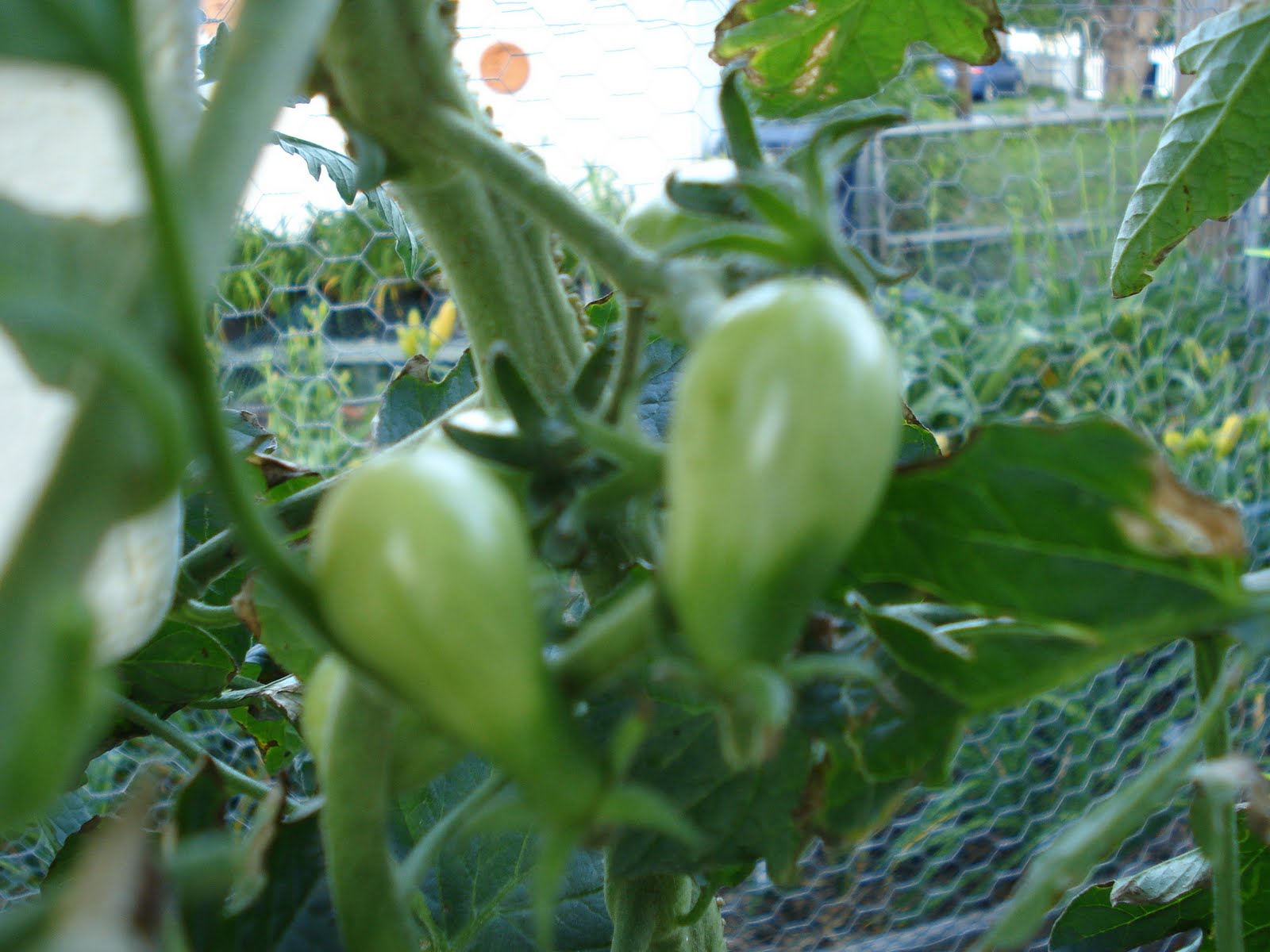
We've harvested two of the cutest little Yellow Pear tomatoes I've ever seen, and have been enjoying strawberries for a few months.  The cucumbers decided to take off in the last week or so, and it's about time to eat the cabbages since the nasty grasshoppers have discovered them.  At least the squirrels will be denied the tomato harvest this year, thanks to The Cage surrounding the area.


Phyllis, Sylvia and Pearl are  doing well, and enjoying the extra outside time that the weather and Jay's surgery recovery has allowed.  Their favorite thing to do is take dust baths underneath my kitchen herb garden.


Tuesday, December 7, 2010

Long Overdue Hydroponic Garden Update

I took some pictures last night, while Jay was outside covering the plants in preparation for the cold, and when I realized I hadn't posted about the garden since May, I figured I should fix that.  We have been thwarted by squirrels ever since we started our garden.  They ate almost every tomato we've grown (or at least taken big bites out of them) along with a whole tower full of swiss chard as it was just sprouting.  We decided to fight with a steel cage match of sorts.
before
after


Before, the squirrels (and probably fruit rats, but we try not to think about that) had free access to all of our garden goodies.  Now, the entire set of 10 towers has been enclosed in chicken wire, including the top.  This has had a profound (and not unexpected) effect on our productivity.  Duh.


Since the drastic steps, we've been able to re-grow the swiss chard, to the point where both chickens and humans can enjoy it.  We also supplied two counties of family with lettuces on Thanksgiving.  There have been tomato feasts, cucumber festivals (of sorts) and radishes galore.  I had forgotten how much I love radishes.
I even harvested so much thyme that it took me three days with the dehydrator getting all of it preserved.  That much thyme is also a little bit nauseating to smell, by the way.  It ended up not even filling a quart sized mason jar.  Everyone act surprised at Christmas if you get a Gift of Thyme from us :-D

I took a bit of inventory last night.  We have asian eggplants for the chickens, two kinds of lettuce, two kinds of tomatoes, red beets, sweet Florida onions, two kinds of non-Plant City strawberries (this will make sense to my Florida readers), two kinds of swiss chard, snow peas, a boatload of thyme (yes, even after all that harvesting), and two kinds of basil and mint.  I'm probably forgetting something that I'll remember after I hit PUBLISH.  Isn't that always the way?  I've gotten a chuckle or two watching The Ladies follow Jay into the cage to see if he'll give them some swiss chard, or to eat some beet greens that are hanging over the side within beak-reach.
herb tower
lots of thyme


We still have issues with squash getting powdery mildew.  Squash doesn't do so well in high humidity, I guess.  We have huge plants, huge leaves that bloom but don't flower... and then get mildewy.  But most everything else is doing really well.

first cuke
I'm pleased with the strawberries, despite their slow start, although if they make gorgeous berries with no flavor, like the variety we planted the last two seasons, it will probably be the last time we grow them.

berry and onion tower
When the weather threatened to get close to freezing last night, we (and when I say, "we" in this case, it means the incredibly tall and handsome man I'm married to) reused some old sheets to cover the towers to keep the tomatoes from freezing, after harvesting all of them that had started to get red on them.  One of the best things about growing hydroponically (aside from more yield, squirrels notwithstanding) is that we save water.  Not just when we grow, but even when it gets cold.  Last year the traditional strawberry farmers, for example, pumped so much water out of the aquifer in the Plant City area that it caused massive amounts of sink holes and water shortages all around the area.  Hydroponic growers can do like we did, and just cover the towers, and not need to spray water as a protective coating on the berries to keep them safe.  We also can turn the pumps on and off, since they're on timers, and we can make sure the unit doesn't water on days without sun.  Handy, huh?

tall and handsome Jay


cold harvested 'maters and cuke
There were probably more than a dozen tomatoes in here, and one cuke.
swiss chard harvest

It took two green bags to store all this swiss chard.


Before we went to bed, we (remember what 'we means'?) put some plant lights out under them whole thing, to keep everybody warm.  Between that and the red heat lamp we have in the henhouse, it looked like we had the biggest french fry lights in the world in our back yard.

good night, Garden!

good night, Chickies!

Tuesday, September 7, 2010

We're Egg-static!

Yes, we've joined the ranks of the Backyard Chicken Egg Producers.  2/3 of our hens are producing eggs!  Phyllis started first, about two weeks ago, and Pearl started shortly afterward.  So far Sylvia is very interested in the process, but she has not started laying yet.  I'm going to get her a copy of "Are You There, God, It's Me Margaret" so she won't feel like she's all alone in the world while the rest of the girls are developing ahead of her.


This picture shows our first 7 eggs.  the larger one in the lid of the container is one of the farm fresh eggs we get from Lancaster's our Produce Club Farm I'm a little bummed that our eggs aren't blue/green, because I thought that Ameracaunas always lay blue/green eggs, but a friend of mine told me that they might not lay that color right from the start, so we'll have to just wait and see.


Jay made a fabulous egg scramble for us this weekend, with mushrooms, tomatoes and fresh basil from the garden.  The egg shells are really crisp and hard, and the yolks are very firm and a gorgeous golden color.  They sit up really high and don't get all runny. 

Wednesday, August 25, 2010

Chicks, Chickens and Chickpeas

finished product
Chicks (like me) who try to eat healthfully and feed their chickens healthfully, can use chickpeas to do both. I eat chickpeas in a lot of ways - in salads, soups, hummus, falafel and my favorite way: roasted.  The chickens really like chickpeas, too, only they take 'em straight from the can.

People who know me well know that my favorite food group is 'brown and crunchy' just like my favorite color is 'paisley.' Roasted Chickpeas area a large part of my plan to eat well and satisfy my quest for 'brown and crunchy' in a healthy way. I get an added protein boost and just love the crunch.  I've had some friends ask me to post my roasted chickpea recipe, so I decided to do that today.

rinse and drain
Preheat oven to 425. I take a can or two of organic Chickpeas, rinse them and drain in a colander.  I like to buy Eden brand because they don't have BCPs in their lining.  Transfer to a layer of towels on a foil-lined jelly roll pan to dry.  Once dry, I remove the towels and roast in the oven for about 15  minutes on the foil lined pan.


drain on towels
Take chickpeas out of the oven and dump them in a mixing bowl, and drizzle with olive oil.  I add Greek Seasoning from V-Spicery, a locally owned spice shop and sea salt to taste, then return to the oven for another round of roasting, 15 minutes or so.  Stir and return to oven again, another 15 minutes until they get really brown and crunchy. This part is really subjective.  I like mine REALLY brown and REALLY crunchy.  Some days it takes 30 minutes, some days it takes 45 minutes, depending on the humidity.  Shake, stir and sample A LOT, while you are obtaining the right amount of brown-ness for you.  Watch out when sampling, though. I got a really bad chick-pea-sized burn on the inside of my lower lip last time - that olive oil is HOT!  Cool and store in an air-tight container.

add seasoning
bake and stir
Chicken Update: while I have your attention... the chickens have decided to go back to putting themselves to bed at night again, and have started eating again.  We realized they prefer eating off a flat surface like a cement block instead of out of their feeder.  We found a feeder they like better, and replaced their waterer, too.  Both seem to be more accepted than the old ones.  We also switched feed, and they like the new stuff (Manna Pro) better than the last kind.  I thought that Sylvia was going to be giving us our first egg a couple of weekends ago, but it turned out to be a false alarm.  She was walking around, bitching, two or three days in a row.  I know it's really hot here, and that the heat might be causing the delay in their egg production. Here is a <30-second video of Sylvia having PMS:


Thursday, July 22, 2010

Mild Chicken Worry

I’ve started to get a little anxious that if our chickens crossed the road, they’d have to take the short bus to get there.

It’s been a month or so since I’ve posted anything new on the blog.  Not a lot has been going on between Jay and I both taking turns being sick and it being hot as Hades outside.  The girls will be 6 months old on 7/31, so we should get eggs soon after that, I hope.  Jay finished off the nesting boxes for them, and I put in the wooden ‘inspiration’ eggs for them.  And now we wait.

 While we’re waiting, my worries grow a little each day.  Why, when after 3 months of putting themselves in the hen-house at night, do Sylvia and Pearl want to camp out on the ladder outside (that’s not big enough for all of them) instead of going in their house?  Phyllis is left conflicted about this, because she wants to go in the hen-house at night on her own, but doesn’t want to stay there by herself, so she does laps from the ladder to the hen-house and back again.   I know they’re ‘just chickens.’  But the spot they’ve chosen to sleep on at night now is not weather-safe.

Pearl on the Ladder
There is nothing to protect them from getting drenched in our coming-down-sideways rains if I leave them out on the ladder.  And I don’t want them to get sick and not know what to do with them or even know they are sick until it’s too late.  Not to mention that they have to take turns actually sleeping because the ladder is wide enough for exactly 2 and one half chickens to roost.  Someone has to stand up if the other two are settled in.  So out we go, at dusk every night, with a container of bulgur wheat to coax them up in the hen-house.  Or worse, have to relocate them and chase them around squawking and getting all overheated (them, not us.) Once we shut the door (which we didn’t used to do once they started going in there on their own a few months ago) they get all pissy and upset and fret over the door being closed.  I can just picture them dragging tin cups along the wire, chanting, “Let us out, you filthy Screws!!”  Prisoner: Cell Block H: The Poultry Yard.  Then, to save time in the morning, we have to go back outside before we go to bed to open the door back up so they can get out on their own by themselves and not wait for one of us to get up.

Then there is the food situation.  I have this 4 page list of things I got off of Backyard Chickens that people (and their poultry) deem as good and proper chicken treats.  Ours won’t eat any of it.  Ours like bulgur wheat and Swiss chard.  They ate cucumber guts once.  Never again.  All these tried-and-true yummy things, including watermelon, cabbage, and darn-near anything leftover that other people’s chickens eat, ours won’t touch.  If I bring them something they are not familiar with, or have decided they don’t like, they pace around it in a circle, muttering a slow suspicious, ‘buck buck buck BUUUUUUUUck’ and eye it sideways.  Always slow, always 4 'bucks' with the last one drawn out and wary.

Phyllis being Suspicious
Phyllis will always come up to check it out, but if she won’t eat it, the other two won’t even try.  Strawberries? Nope. Tomatoes? Nope. Even things they liked a month ago like Spanish nettle weeds and their own food they all of a sudden don’t want to eat.  On top of that, they’re big girls now, so we switched them to layer feed instead of growing feed.  Not so much.  They don’t like that, either.  If they were picky toddlers, they’d be living off chicken nuggets and fries.  The irony is not lost on me.  Their version of that is scratch grains and black oil sunflower seeds.
Sylvia

Next comes the heat.  It’s, like I said, hotter than Hades here.  And humid.  They are panting most of the time.  So I go off to look up what other people do on Backyard Chickens and try some of the suggestions.  1. Pan of cool water for them to step into because if their feet are cool, their whole bodies will cool off.  Nope.  Water pans elicit the same suspicious sideways-glancing, ‘buck buck buck BUUUUUUUck’ as undesirable food does.  And apparently it's VERY SCARY to accidentally step into it while running after a bug, knocking the pan over and spraying water everywhere.  Frozen plastic jugs of ice set in a big Rubbermaid bin tipped over on its side.  Like a walk-in AC chamber.   Nope.  Spritzing them off with water.  Boy howdy were they offended by that!  People in dry hot climates use those mister-fan things, but in Florida that doesn’t actually cool anything off. It just makes it more humid and sticky and harder to breathe.  We’re discussing finding a way to put a fan out there, that at least might get the air moving a little and cool things off.   At 2:00 every afternoon I go out and unroll a roll-up shade to give them some relief from the afternoon sun and put out a few frozen water jugs over in the coolest part of the coop.  I don’t know if they realize it or not that they can sit closer to them and cool off a bit, but I feel like I’m at least trying to give them some relief. 

I had no idea there was this much crap to worry about with chickens.  I thought they’d be little low-maintenance garbage disposals that had a happy edible by-product for us.  Everyone else seems to have chickens like that.  Tammy’s chickens are 2 or 3 weeks younger than ours and are already laying eggs!  We’ve got eccentric high-maintenance, low-achieving short-bus chickens that seem to defy all the chicken conventional wisdom. I feel like there is something I’m missing… something that I’m not doing right, or enough of, for them to succeed.  I don’t want my chickens to get an Attendance Award.  I want them to Graduate with Honors!  Hell, at this rate I’d settle for a happy productive C-student chickens.

Where is The Chicken Whisperer when you need him?

Tuesday, April 27, 2010

Chicklet Update


We've had the chickens a little over a week now.  Progress has been made on the name front for half of them.  The Frizzle is now Phyllis, and the Cochin is now Babette.  We're still struggling over what to name The Twins.  They are all developing their own distinct habits, but really only Babette and Phyllis are showing any signs of personality and behavioral distinction.  The Twins are more skittish (actually, everyone is skittish around me unless I have soybeans or bulgur wheat)  Jay is a much better chicken whisperer than I am, and is more willing to chase them down and force interaction than I am.  Whenever I go out there, The Twins are convinced it's bed time and troop up the ladder into the hen house.  Babette comes waddling over to see if I've brought a treat, and Phyllis starts to follow The Twins up the ladder, but stops half way to see if Babette is onto something.
 
As far as coop improvements go, we've made some adjustments and enhancements.  We noticed the girls are panting a bit (and it's only April!!!) The coop is very shady until the late afternoon, when that western sun hits it and the reflective roof isn't much help. We found an outdoor roll-up shade and attached it so I can go out in the afternoons and unroll it to give them more refuge from the sun.

I also bought a small shallow storage bin.  I am deciding between making it a chicken pool or a sand box.  Both water and sand have cooling properties.  Jay added roosts to the hen house.  They don't get used at night unless Jay picks them up (which they hate) and puts them up on them, but I see Phyllis and the Twins on them a lot during the day.


I got a new chair to sit on in there, and added a small roost across the top of a bushel basket so they could practice.  Here, one of The Twins is practicing. She fell off immediately after I took the shot, but now that I have it full of paving stones, at least it doesn't topple over when they fall off.  I'm hoping that, since they obviously understand the concept of roosting, they will eventually decide it's a neat way to sleep at night and we won't have to traumatize them every night by moving them up on top of their snazzy roosts in the dark.  Normally they snuggle up under the roost bar - except Babette.  She finds a roost in the coop to sit on and has to be moved the whole way into the house at night.


I haven't had as much time to spend with them as I had hoped, but I go out every night for a little while when it's cool and hang out in my chair with them.  I really enjoy just watching them peck around and peep at each other.  Sometimes when I'm at the kitchen window I look out and see them chasing each other around or just flying for no apparent reason across the coop.  I see some occasional chicken chest-bumping, but nothing ever really mean going on.